Article · 9 min read
Best User Onboarding Tools - Categorised and Reviewed for Your Needs
The best user onboarding tools depend on the job you need done. An in-app guidance tool such as Appcues, Pendo, Userpilot or WalkMe builds the tours and checklists, while email, video, analytics, feedback and help-centre tools cover the rest. As of October 2026, three of the eight in-app tools listed here print no paid prices at all.
 By Serra Alban

In short
Eighteen tools sorted into six jobs, with the in-app guidance tools compared on entry price, free plan and G2 rating as read in October 2026. Ease of use is the most-praised theme for five of the seven in-app tools with a review reading, and the learning curve is the top complaint for five. Start with one in-app tool and add other categories only for a gap you can name.
When we searched "best user onboarding tools" in October 2026, seven of Google's top ten results were published by companies selling onboarding, implementation or training software, and several put their own product first. No onboarding vendor owns UserOnboarding Academy or pays for placement here. So this list adds what those pages leave out: each in-app tool's entry price and G2 rating as read in October 2026, and what its own reviewers complain about most.
The 18 tools are grouped by the job they do. Many products need only one in-app guidance tool; the other five groups are worth adding only when you can name the gap they'd fill.
What are user onboarding tools?
User onboarding tools are the software that gets a new user from sign-up to the first result they came for. Some work inside your product (tours, tooltips, checklists); others work around it (emails, videos, analytics, help articles).
| Job | Tools in this list | Add it when |
|---|---|---|
| In-app guidance | Appcues, Chameleon, Intercom, Pendo, UserGuiding, Userpilot, WalkMe, Whatfix, Intro.js | users sign up and get started without talking to you |
| Video and webinars | Demio, Wistia | the product needs a live or recorded walkthrough |
| User feedback | Fullstory, UserTesting | you can see where users drop off but not why |
| Customer.io, Drip | users leave before they finish setting up and need a reason to return | |
| Behaviour data | Freshpaint, Heap | you can't yet see which onboarding step users abandon |
| Knowledge base | Zendesk | support keeps answering the same setup questions |
How do the in-app onboarding tools compare on price?
Four of the eight in-app tools print an entry price, from $249 a month billed yearly (UserGuiding) to $3,600 a year (Appcues); Intercom charges per support seat, and Pendo, WalkMe and Whatfix quote every paid plan. Every figure below was read on the vendor's pricing page or G2 on 19 October 2026.
| Tool | Entry price (October 2026) | Free plan | G2 rating (October 2026) |
|---|---|---|---|
| Appcues | $3,600 a year (Spark, up to 1,000 MAUs, teams of 25 or fewer, plus a $250 one-time fee) | None listed | 4.6/5 from 359 reviews |
| Chameleon | $279 (Startup, 2,000 monthly tracked users; the card doesn't say per month or per year) | None listed | 4.4/5 from 364 reviews |
| Intercom | $29 per seat a month, billed monthly (Essential), as most loads of its pricing page showed it | None listed | Not shown |
| Pendo | Custom quote | Pendo Free, up to 500 MAUs | 4.4/5 from 1,821 reviews |
| UserGuiding | $249 a month billed yearly (Starter, up to 2,000 MAUs) | None listed | 4.7/5 from 781 reviews |
| Userpilot | $299 a month (Starter, up to 2,000 MAUs and 3 seats; billing period not stated) | None listed | 4.6/5 from 1,020 reviews |
| WalkMe | Custom quote | None listed | 4.5/5 from 583 reviews |
| Whatfix | Custom quote | None listed | 4.6/5 from 563 reviews |
MAU means monthly active users. Intercom's G2 listing now redirects to its Fin AI agent, so the reviews there don't describe product tours, and our Intercom review shows no rating for that reason. For more tools side by side, the comparison hub has a price table.
What do G2 reviewers praise and criticise in each in-app tool?
Ease of use is the most-praised theme for five of the seven tools we have a review reading for, and the learning curve is the most common complaint for five. For Chameleon, Userpilot and WalkMe it's both, which suggests the first flow is quick to build and the advanced settings take longer to find.
| Tool | Most-praised theme | Most common complaint |
|---|---|---|
| Appcues | Easy to use: 186 of the 294 G2 reviews we read | Missing features: 86 of 294 |
| Chameleon | Easy to use: 179 of 300 | Learning curve, hard-to-find settings: 73 of 300 |
| Pendo | Analytics and product insights: 209 of 300 | Learning curve, hard-to-find settings: 77 of 300 |
| UserGuiding | Easy to use: 164 of 299 | Missing features: 61 of 299 |
| Userpilot | Easy to use: 166 of 300 | Learning curve, hard-to-find settings: 97 of 300 |
| WalkMe | Easy to use: 136 of 300 | Learning curve, hard-to-find settings: 82 of 300 |
| Whatfix | Customer support and success team: 151 of 300 | Learning curve, hard-to-find settings: 65 of 300 |
The reviews were read on 19 October 2026. Intercom has no reading, for the reason above.
Which in-app onboarding tool fits which team?
The in-app tools split three ways: onboarding tools for your own web product, product analytics with guides attached, and digital adoption platforms built for employees as much as customers. Here is each one in that light, in alphabetical order.
Appcues
Appcues builds in-app flows, checklists, resource menus, banners and surveys, and sends email and push messages from the same platform. Its pricing page says every plan includes every experience type; only Spark, for teams of 25 or fewer, prints a price, and the free trial starts with a sales call.
Chameleon
Chameleon builds tours, tooltips, microsurveys and checklists for a web app, with A/B testing listed from its Pro plan. Its 14-day free trial gives Enterprise-level access with no credit card, according to its pricing page in October 2026.
Intercom
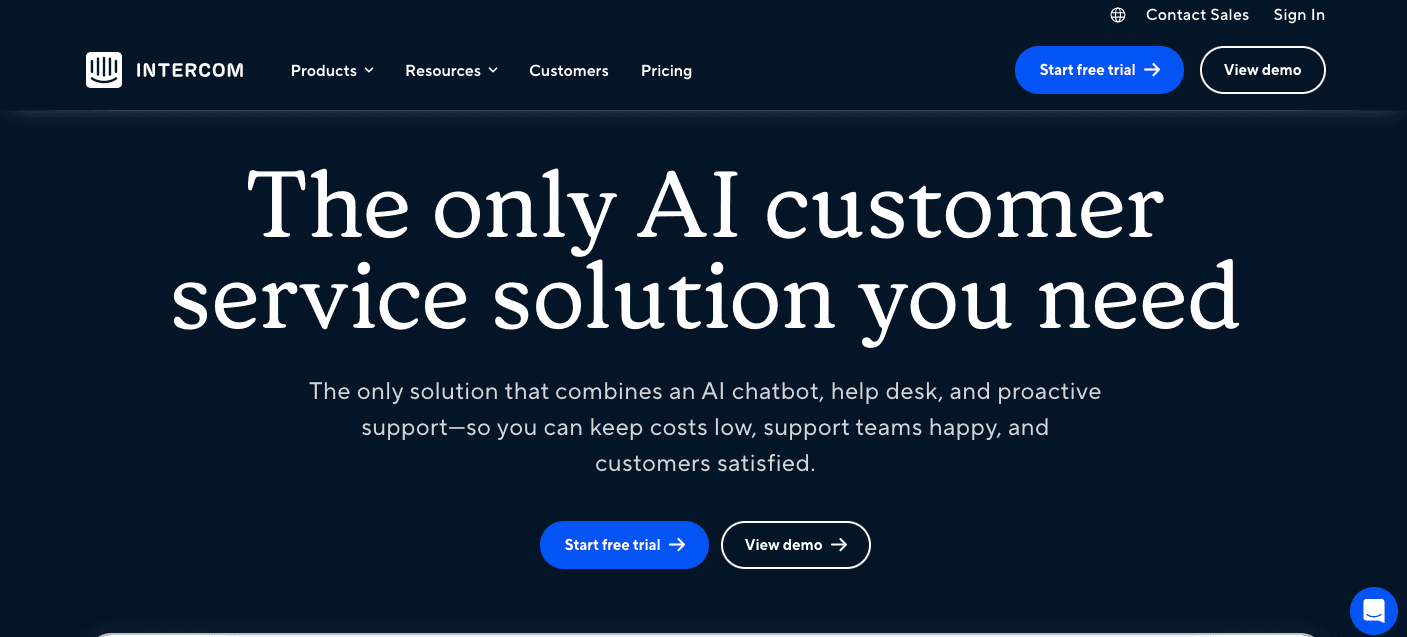
Intercom is a customer service platform (shared inbox, help centre and the Fin AI agent) that also sends product tours, checklists and tooltips. Tooltips and banners come with every plan, but product tours and checklists need a paid add-on on top of the seat plans, so it suits teams that already run support in Intercom.
Pendo
Pendo pairs product analytics with in-app guides for web and mobile apps, and it's the only in-app tool here with a free plan: Pendo Free covers up to 500 MAUs. Paid plans are quoted, and the learning curve plus friction with the guide builder and feature tagging (73 of the 300 reviews we read) are the most common complaints.
UserGuiding
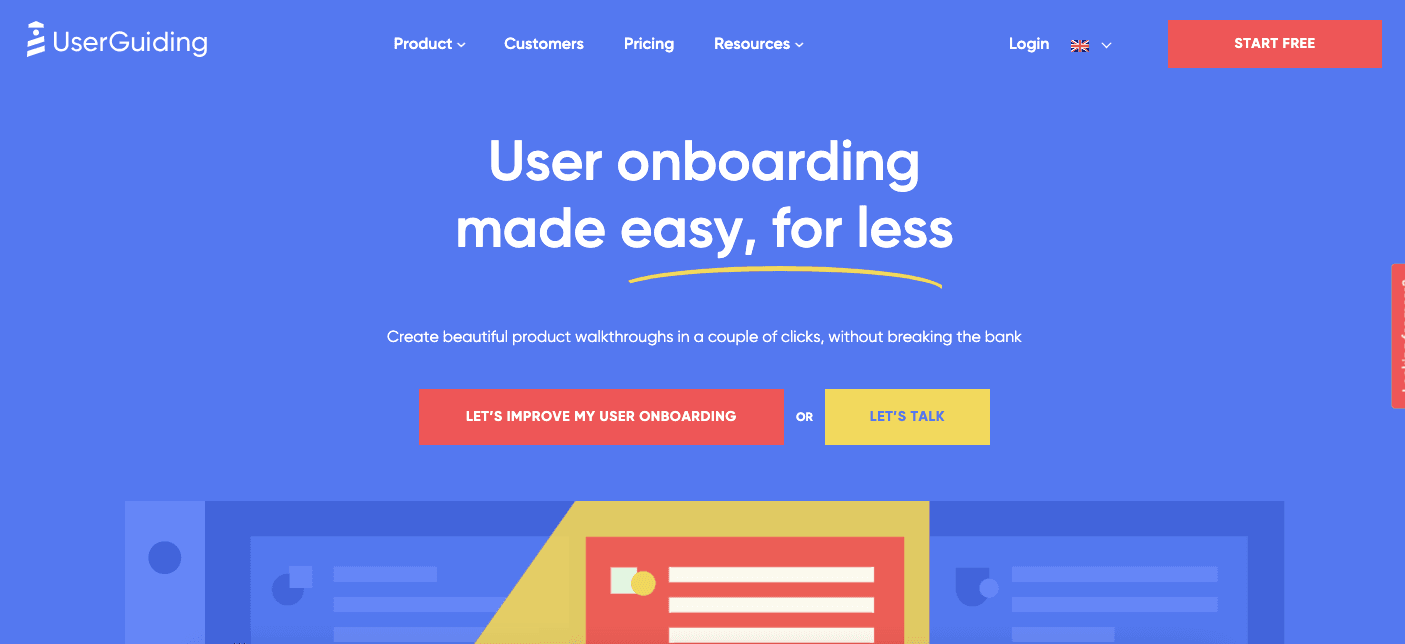
UserGuiding builds product tours, checklists, resource centres and surveys on web apps without code, and prints its prices. Its own pricing FAQ says it doesn't support native mobile apps, and A/B testing, localisation and custom CSS start above the Starter plan.
Userpilot
Userpilot pairs no-code flows, checklists and surveys with product analytics and session replay. Analytics is praised in 138 of the 300 reviews we read, yet reporting depth is criticised in 61, and native mobile support isn't on Starter: its pricing page lists it among Enterprise's additions.
WalkMe
WalkMe is a digital adoption platform for web, desktop and mobile software, sold in one version for employees and one for customers. Both are quoted, and its pricing page lists no trial, so it fits organisations buying through sales rather than a team that wants to try it this afternoon.
Whatfix
Whatfix adds in-app guidance to web, desktop and mobile apps, for staff or customers, and sells product analytics alongside it. Pricing is a flat fee per product plus user licences, quoted after a demo; its support team is the most-praised theme in the reviews we read.
Intro.js
Intro.js is an open-source JavaScript library for step-by-step tours and hints. Your developers write and ship every step, and there's no visual builder, targeting or analytics unless you build them; its homepage also links to separate commercial use terms, so read the licence before you ship it in a paid product. Our guide to building onboarding with open-source libraries covers that trade-off.
When do you need a video onboarding tool?
Video helps when the product needs a walkthrough a tooltip can't carry: a live kick-off for a team account, or a recorded demo of a complex setup. If users can learn by clicking, an in-app tour usually does the same job with less production work.
Demio
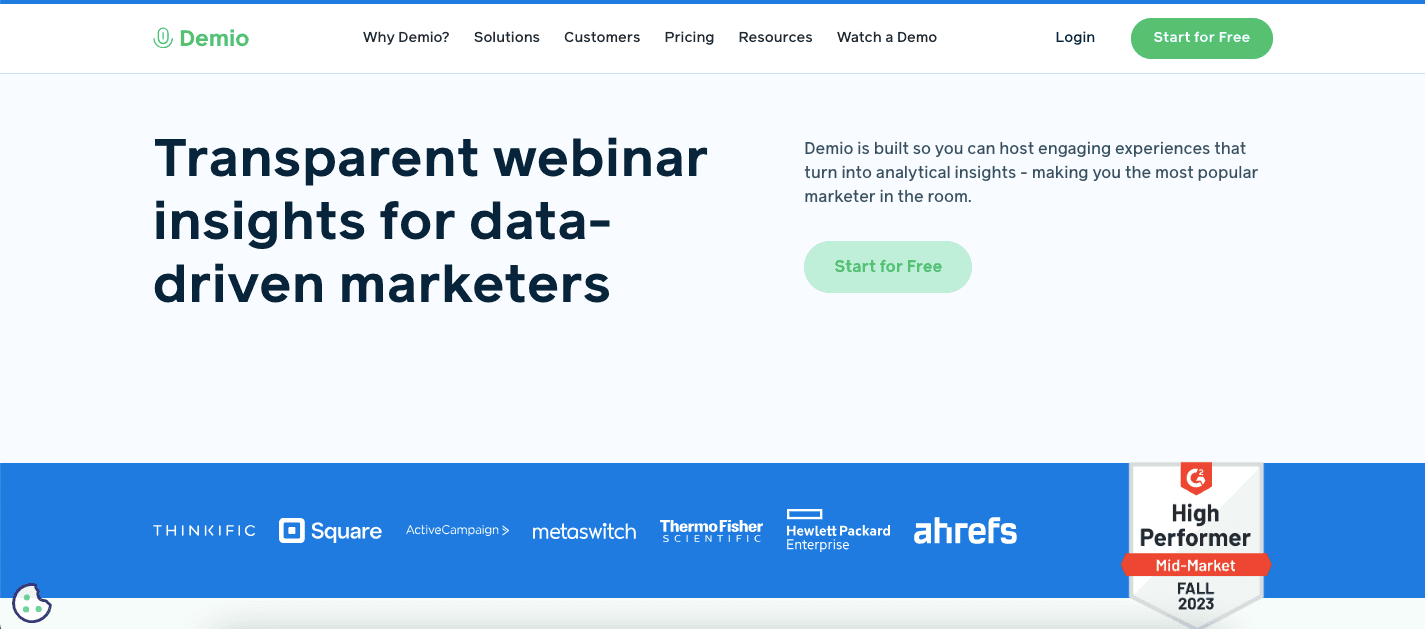
Demio is a webinar platform you can use for live onboarding sessions and product demos, with polls, Q&A and replays. It's built around webinars, so it won't cover other onboarding formats.
Wistia
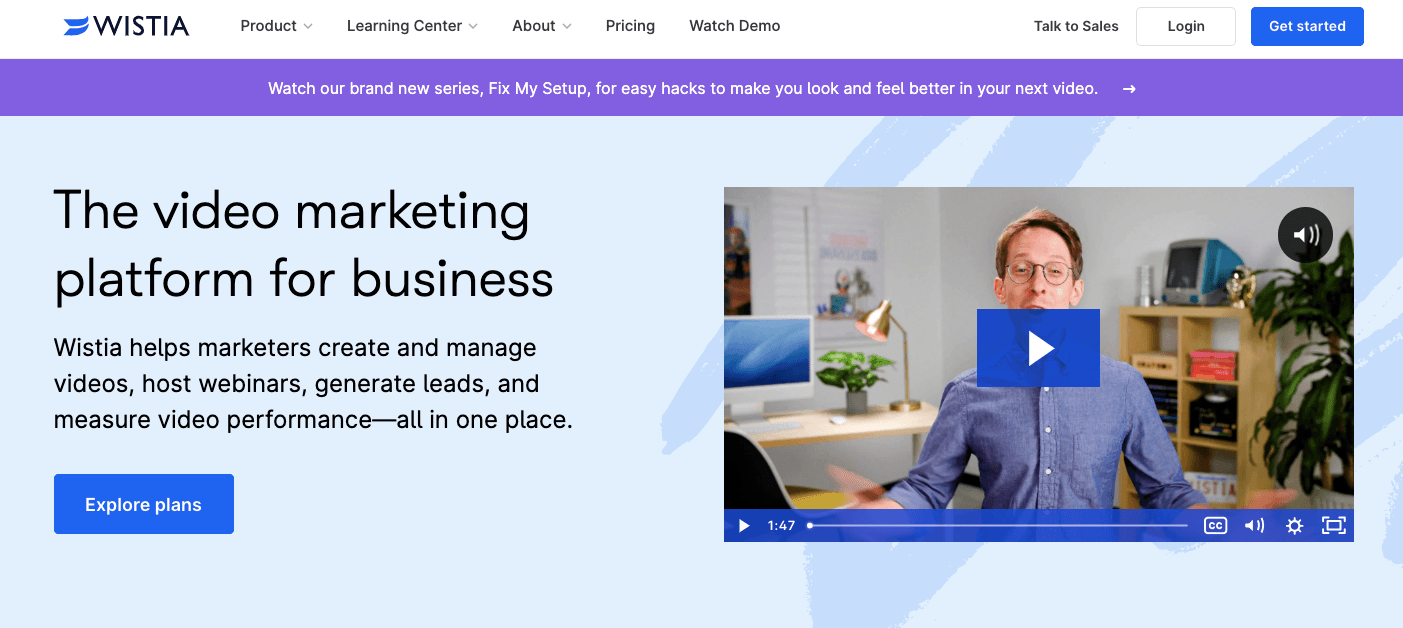
Wistia hosts and plays video with a player you can brand, and reports how far viewers watch. At the time of the screenshot its homepage called it a video marketing platform, so think of it as the place your onboarding videos live, not the tool that guides users.
How do user feedback tools help onboarding?
Feedback tools answer the question analytics can't: why a user stopped. Session replay shows what one user did before they left; moderated or unmoderated tests show you a new user thinking aloud.
Fullstory
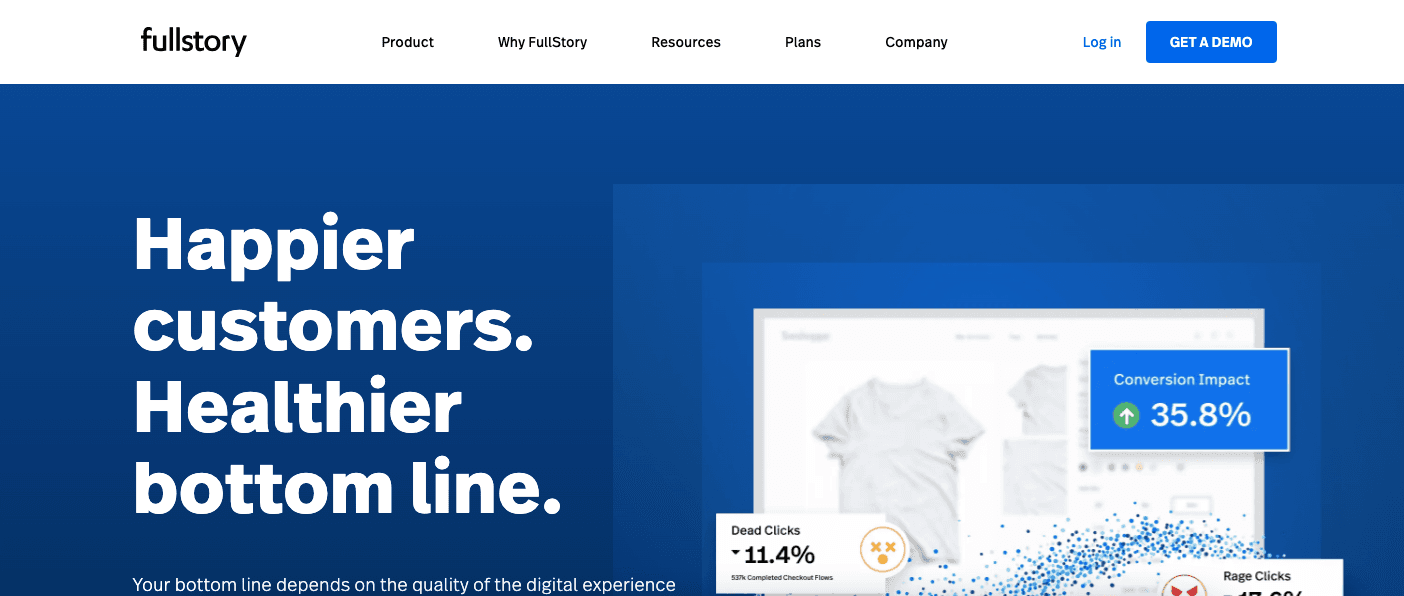
Fullstory records sessions you can replay, with heatmaps and funnels to find where onboarding stalls. Since it acquired Usetiful (announced in November 2025), Fullstory also sells in-app guides and surveys as an add-on to its Analytics plans, priced on request as of October 2026.
UserTesting
UserTesting runs usability tests with participants from its panel, recording them as they try the tasks you set. Watching a handful of new users attempt your first-run flow is often the fastest way to find the step that confuses them.
When is email the right onboarding tool?
Email reaches users who've left the product, which no in-app tool can. Use it for the user who signed up and didn't finish setup, triggered by what they did or didn't do, not on a fixed calendar. Our email onboarding guide covers the sequences.
Customer.io
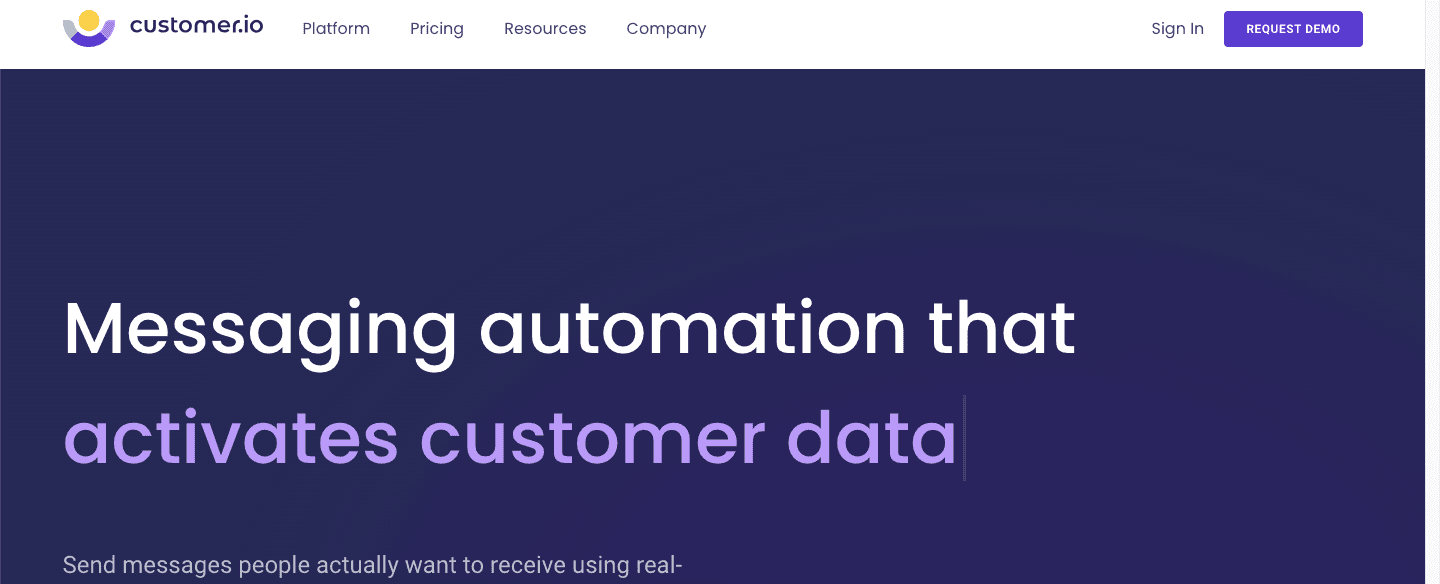
Customer.io sends emails and other messages triggered by what users do in your product, with segmentation and A/B tests. That suits onboarding sequences that react to progress, though complex campaigns take time to set up.
Drip
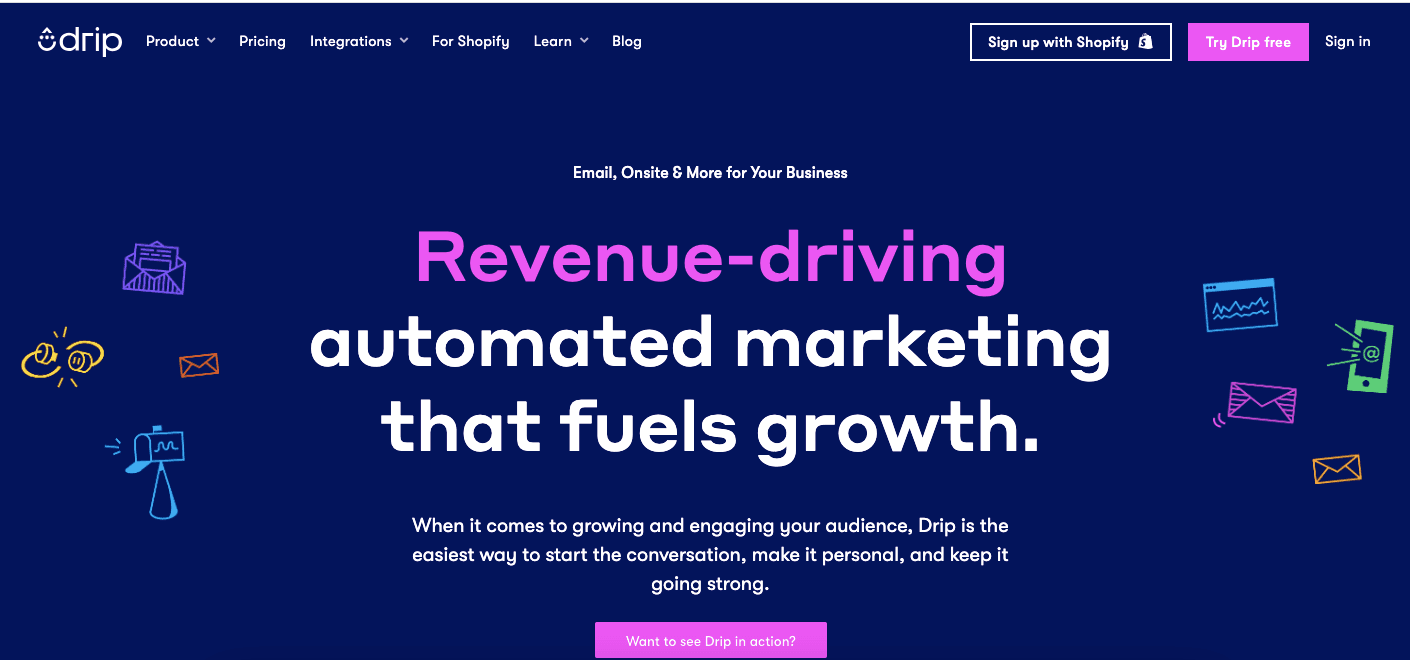
Drip is an email marketing automation platform with tagging and automated sequences. At the time of the screenshot its homepage offered a Sign up with Shopify button, so check that it suits a software product before you choose it.
Which behaviour data tools show where onboarding fails?
Behaviour data tools record events (sign-up, first project, invite sent) so you can build a funnel of your onboarding steps and see which one users abandon. If your in-app tool or product analytics already does this, you don't need a separate one.
Freshpaint
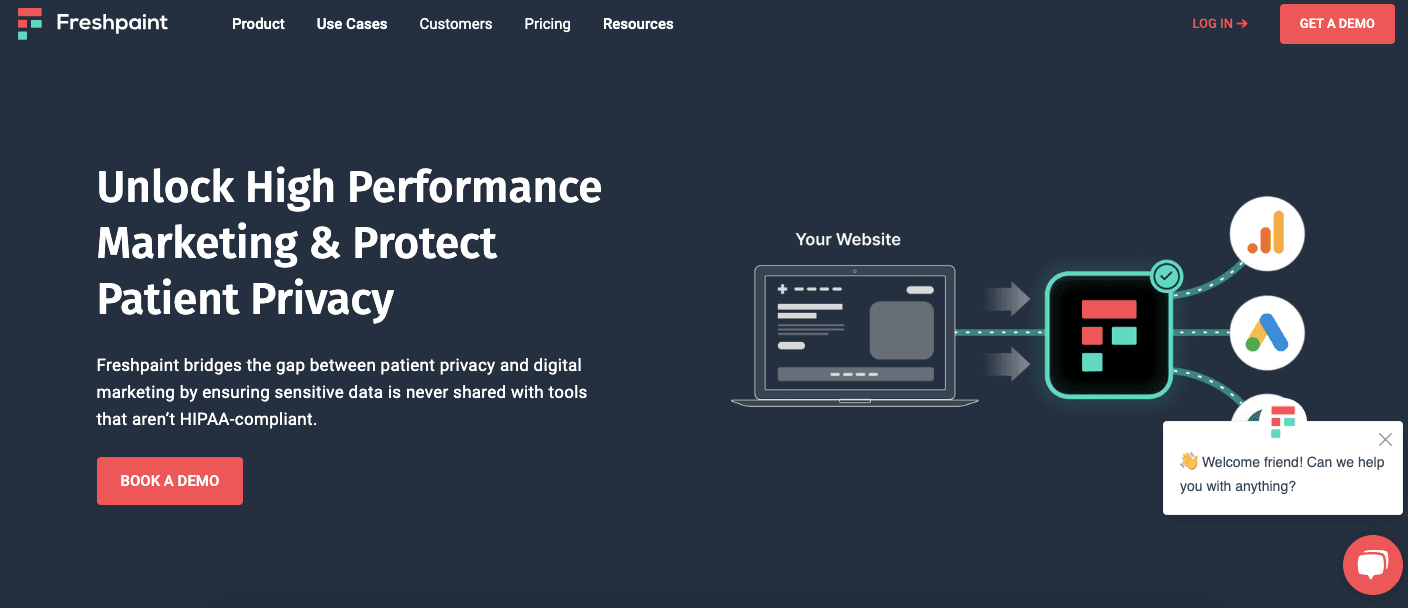
Freshpaint collects event data from your site or app and sends it on to analytics and ad tools. At the time of the screenshot its homepage already led with patient privacy and HIPAA compliance for healthcare marketers, so it fits onboarding analytics mainly if you work in healthcare.
Heap
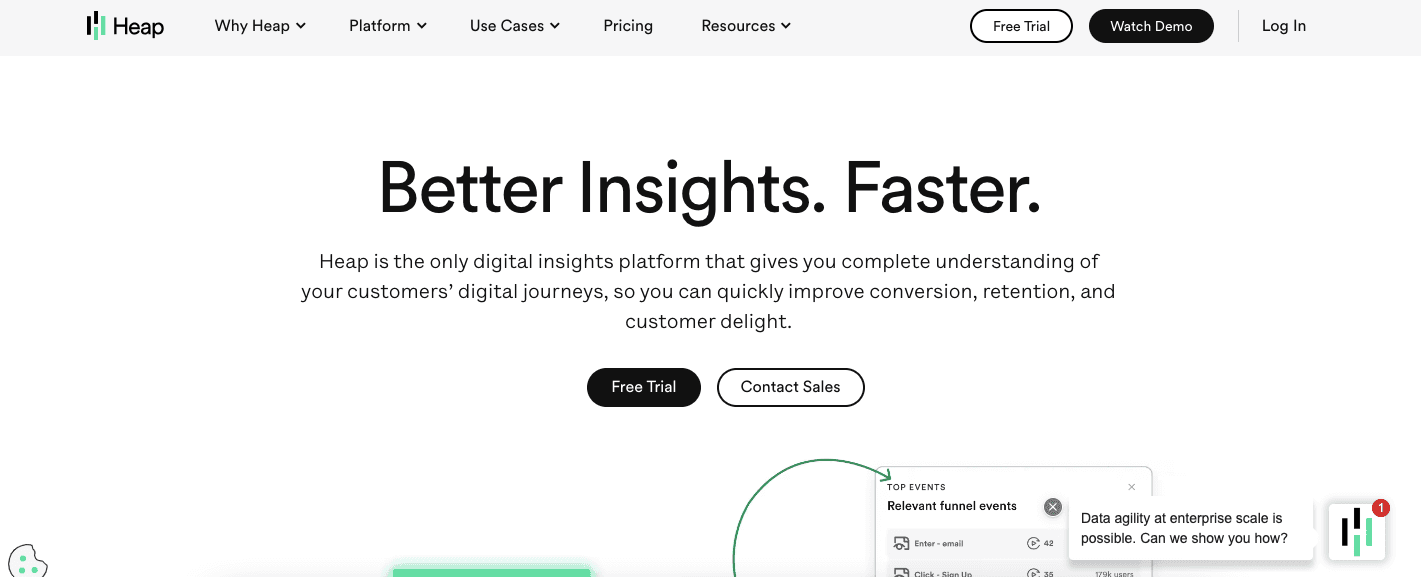
Heap, now part of Contentsquare, captures user interactions automatically, so you can define an onboarding funnel after the fact instead of tagging every step in advance. The volume of data takes some care to turn into a decision.
Do you need a knowledge base for onboarding?
A knowledge base earns its place once support answers the same setup questions every week. In-app help that surfaces the right article at the right step cuts those tickets; a help centre nobody opens doesn't.
Zendesk
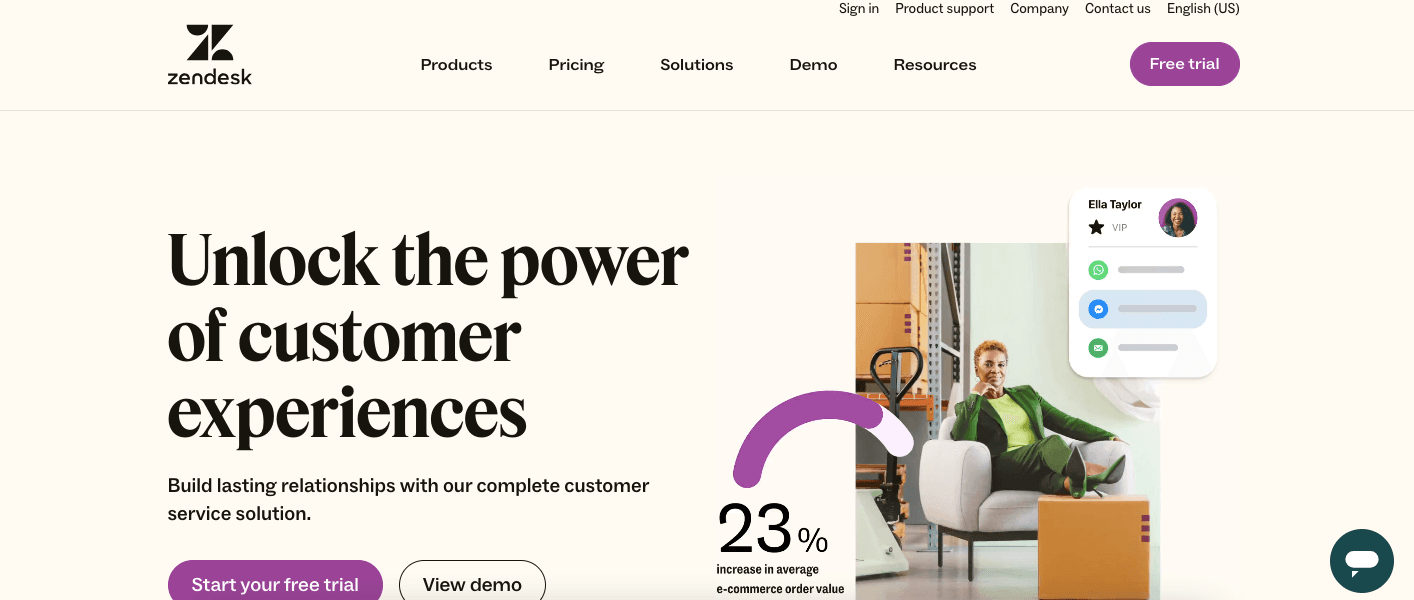
Zendesk is a customer service platform whose help centre lets you publish setup articles and FAQs that users can search. Building a help centre people actually use takes ongoing writing, not a one-off import.
What is the best user onboarding software for your team?
There's no single best tool; there's a best fit for who your users are and who will build the onboarding. These rules follow from the prices and review pages above:
- Customers using your web app, flows built by non-developers: a tool with a printed price (Appcues, Chameleon, UserGuiding or Userpilot) lets you compare cost before a sales call.
- You want product analytics in the same tool: Pendo, which you can start on its free plan, or Userpilot.
- Employees learning software you didn't build: a digital adoption platform such as WalkMe or Whatfix; our digital adoption platforms guide compares them.
- Support already runs in Intercom: its tours sit beside your inbox, at the cost of an add-on.
- Developers want full control and there's no budget: an open-source library such as Intro.js.
For the in-app tools compared plan by plan, read user onboarding software; for tools you can start without paying, see free user onboarding software; and if your onboarding is a high-touch implementation project, start with customer onboarding software.

About the author
Serra AlbanSerra is a creative content writer focusing on UX and product and everything that deals with onboarding practices.